How to create the perfect event invitation?
Whether it’s a professional conference, a gala evening, or a webinar, every event starts with an invitation. An invitation not only announces that the event is taking place, but is usually also the first moment when a potential guest comes into contact with the event. The impression it creates is therefore also the first impression of the event itself. A good invitation should therefore not only invite, but also be thoughtfully designed. Let’s take a look together at how this can be achieved and what you should keep in mind along the way.
5 elements of a good invitation
It doesn’t matter whether you invite by letter or by e-mail: when planning an event invitation, you should never forget these points:
1. The first impression is key
What is the first thing the recipient sees when they receive your invitation? For e-mails it’s the sender and the subject line, and for invitations sent by post it’s usually the envelope or the card.
Whatever you choose: make sure this element is designed so that it wouldn’t even occur to the recipient not to open the invitation. The subject line should be descriptive while also giving a good reason to open the e-mail — short but to the point. Create a sense of urgency for the recipient (“Don’t miss [event_name]!”) or address the recipient personally in the subject line (“Mr. [name], come to [event_name]!”).
The sender should appear professional and be clearly identifiable — e.g. the name of your company or event series — so as not to end up in the spam folder. The same goes for letters: choose a design that looks personal and high-quality and matches the character of your event. For a formal reception or a VIP event, this could be a high-quality, handwritten envelope, while for more informal occasions a professionally designed card will suffice. Whatever you decide, though: keep in mind that the design is the first thing the recipient learns about you and your event.
2. The more personal, the better!
The recipient has opened the invitation — now it’s time to convince them that the event can’t take place without them. So when it comes to the form of address, the rule is: the more personal, the better. Anyone who feels like they are just one in a million on the invitation might get the impression that the event itself is no different. So avoid generic phrases like “Dear ladies and gentlemen” and instead invite each individual guest with a personal greeting.
With the right tools, this hardly takes any more time than a generic bulk e-mail in which a single standard invitation is sent to all guests — and it pays off.
3. Tell me what I want
You usually have exactly one chance to convince the recipient of the invitation to come to your event: when they read the invitation for the first time. If you don’t convince them even then, or if they are still unsure, you probably won’t have another chance to persuade them.
So make use of the attention you’ve earned with great design and by addressing the invitee, and tell them right now why this event is exactly what they’ve been waiting for. What makes your event special? What awaits them there that they can’t get anywhere else? Convince them in such a way that they can’t help but accept right away.
With cleverly chosen words and an extensive and interesting offer, you can significantly increase the number of registrations.
4. Don’t forget the factual information
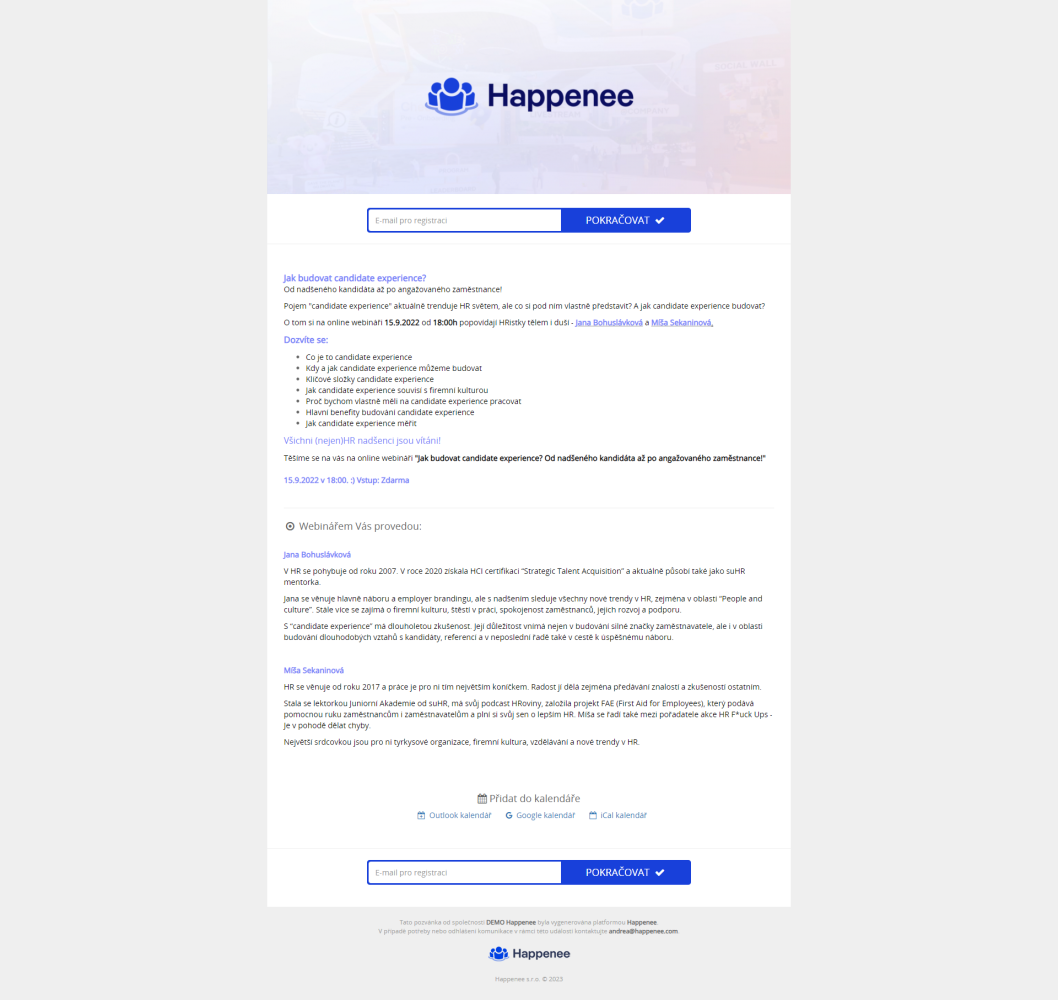
Of course, the invitation should also include a few details about the event. To make sure you don’t forget anything, it’s best to follow the five big questions:
- What is happening?
- When is it happening?
- Where is it happening?
- Who is speaking, performing, or taking part?
- How can you sign up?
Your guests shouldn’t have to search for this information — so place it clearly and logically so that they can’t overlook it.
5. Call to action
So that the invitation doesn’t disappear into some drawer or the depths of the e-mail inbox after the first reading — and thus also out of the recipient’s mind — you should tell them how to respond to the invitation. Should they call you? Register through a registration page? Send a reply letter? The rule is simple: the easier it is to respond, the higher the likelihood of an immediate reply.
And that’s exactly what you want: yes or no, accept or decline, before the whole event is forgotten. So set the threshold as low as possible, for example by including a pre-prepared card with the invitation on which the recipient only ticks whether they’ll come, or — even more easily — by creating a registration page with an easy-to-enter domain. The simplest way to do this is by sending an e-mail, where the registration page can simply be included as a link that the recipient only has to click to register.
Conclusion
As you can see, if you consider a few points, writing a good invitation isn’t all that complicated. Happenee will help you: personalized. Targeted. Automated. With Happenee, you can send individual invitations to different groups of guests. You decide for yourself how, when, and with whom you want to communicate.