Tailored experiences, AI and green events: 7 trends defining events in 2025
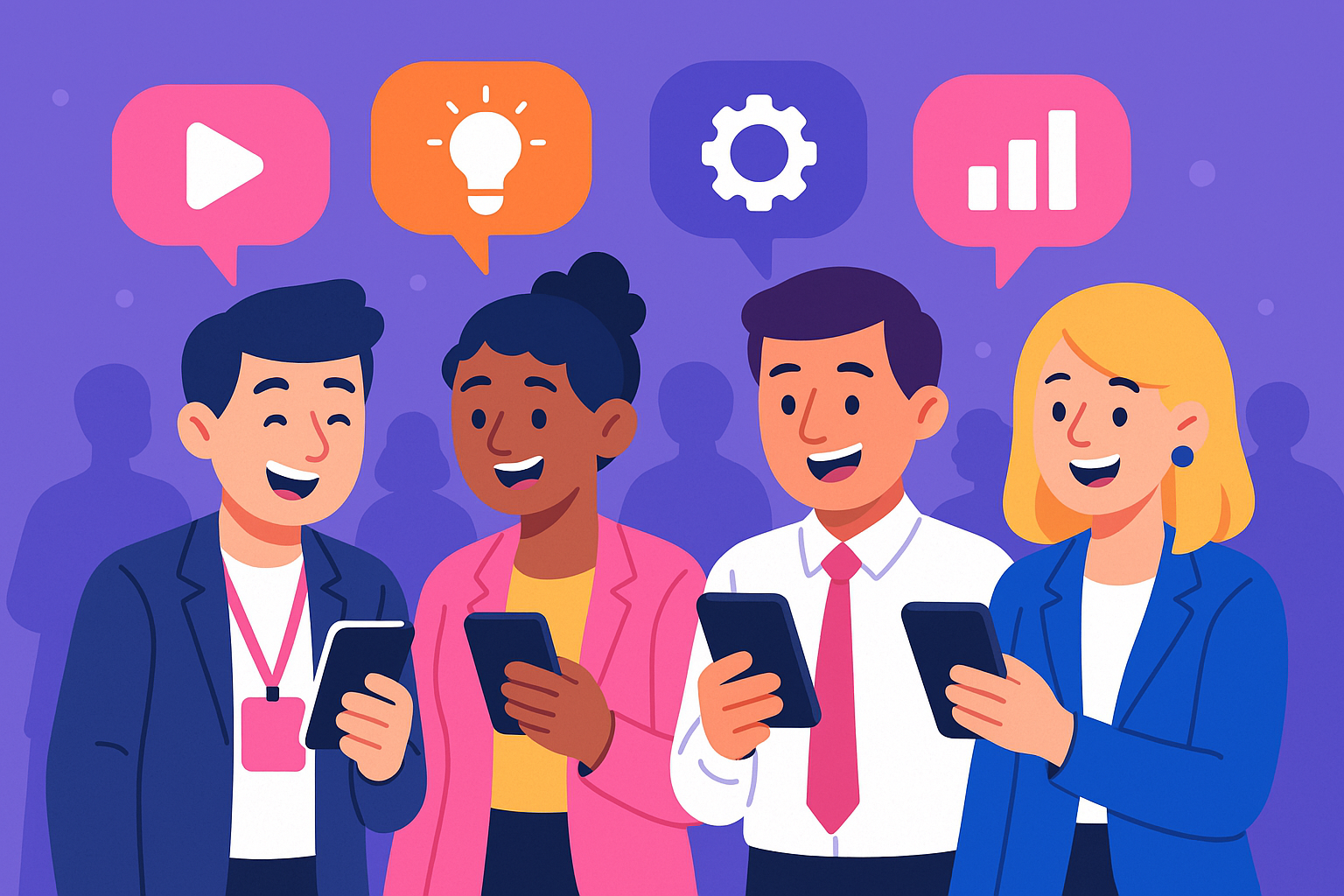
The events world has been on a turbulent ride — from online marathons during the pandemic to the triumphant return of live events. It’s clear that events are back in full force, but they’ve also changed significantly. Budgets remain under scrutiny and audience expectations are rising, but fortunately new trends and tools are arriving that make organizers’ lives easier (and reduce the stress level). You can probably guess what we’re talking about: personalization, artificial intelligence, sustainability… Let’s take a look together at the 7 most prominent event management trends for 2025 and how to make the most of them so that your events are unforgettable, unique and comfortably manageable. Read on so you can stay a step ahead — you can throw yourself into the future of events with enthusiasm and without unnecessary stress!
1. Personalization to the max: an experience tailored to every attendee
We’re used to Netflix or Spotify recommending content that matches our taste exactly. Why should events be any different? In 2025, visitors no longer want to be just a face in the crowd — they expect an experience that feels as if it was prepared just for them. Personalization is permeating every phase of an event: from the invitation (addressing people by name and taking their interests into account), through a flexible program that lets them pick their preferred topics, to post-event communication with tailored recommendations. Thanks to smart event apps and AI, you can collect data about attendees’ preferences and offer everyone different content — such as recommendations for relevant talks, booths or networking based on their profile. That way every attendee feels like a VIP guest, not just an anonymous item on a list.
How to run a personalized event in practice?
- Get to know your audience before the event: Ask about preferences during registration (favorite topics, dietary restrictions, expectations). Segmenting the data lets you prepare different attendee personas.
- Tailor your communication: In e-mails, address attendees by name, mention their company or field. Offer an agenda “recommended just for you” and display a personalized list of recommended program items to each person in the mobile app.
- Give people a choice: Offer parallel tracks or formats (workshop, talk, discussion) so everyone can find their own thing. Also let them adjust their schedule — for example, adding only selected parts of the program to their calendar. That increases the chance that everyone spends their time at the event as meaningfully as possible.
2. Hybrid events 2.0: online and offline hand in hand
Hybrid events — a combination of a physical gathering with a virtual broadcast — have been with us for a few years now, but in 2025 they became the new standard. Where an online broadcast used to be an “emergency fix,” today it’s a strategic choice for extending an event’s reach. Many attendees still appreciate the option to join remotely, and increasingly expect events to also have an online version or a recording to watch later. A hybrid event can thus have a much wider audience — hundreds of people sit in the hall, but hundreds or thousands more watch the stream from the other side of the globe. The online audience is no longer the second division. Thanks to advanced platforms, remote attendees can ask speakers questions, vote, network in chat rooms or watch content on-demand. Organizers are also finding that content from a hybrid event can “live on”: recordings of talks can be offered as a video series, a podcast or an article. One event, many experiences across time and space — that’s the magic of hybrids 2.0.

How to get the most out of the hybrid format?
- Invest in a quality broadcast: Ensure a professional livestream (good cameras, audio, a stable connection) and record all the content. Online viewers will appreciate an HD picture without dropouts and the ability to play back the recording later.
- Engage virtual attendees: Moderate online questions during the Q&A, use live chat or polling, greet the audience on camera. Make sure that even the people at their monitors feel they are a fully-fledged part of the event. Feel free to name a specific question from “Petr from Brno” — personal contact works even at a distance.
- Recycle content and extend the event’s life: After the event, share recordings and materials. Create a “best of” cut, an infographic with the survey results, or a series of blog/LinkedIn posts about the interesting moments. From a single event, you’ll get content for many more weeks and keep the community going.
3. AI as the manager’s sidekick: smarter planning and better decisions
Artificial intelligence (AI) is experiencing a huge boom and is making its way into events too. Don’t worry, this doesn’t mean a robot will take over your job as an organizer — on the contrary, AI is becoming your faithful helper. Imagine a virtual colleague who never sleeps and enjoys going through Excel spreadsheets: that’s exactly how AI helps analyze registration data, predict attendance or suggest the optimal event schedule. AI tools can automate routines such as sending out invitations at the right time, answering attendees’ frequently asked questions (thanks to chatbots) or, say, matchmaking — connecting people with similar interests for networking. Generative AI (like ChatGPT) can draft engaging copy for the event’s marketing, come up with workshop topics or, for instance, create a summary of attendee feedback. During the event, AI can monitor sentiment on social media in real time or analyze which talks the audience enjoyed most (for example based on reactions in the app). The organizer therefore has a better overview, saves a lot of time and can focus on the creative part of the work. In short, AI delivers smarter and more efficient event management — and that’s without any unnecessary extra effort.
According to a prediction by Gartner, AI will automate 80% of customer service queries by 2029.

How to use AI to your advantage?
- A smart helper for communication: If you deploy an AI chatbot on the event website, it will answer prospective attendees’ questions (program, directions, dress code…) 24/7 at lightning speed. That cuts down on routine work for you, and visitors get their answers right away.
- Plan with data: Use tools that apply AI to analyze registrations and suggest, for example, the layout of rooms or the scheduling of breaks based on the number and preferences of attendees. AI can also predict how many people will actually show up, so you don’t needlessly prepare surpluses (or the opposite).
- Create content smartly: Need ideas for themed supporting activities? Have AI generate a few creative tips. Or use it after the event — for example, to automatically evaluate attendees’ polls and comments into a clear report. You’ll save hours of time that you can devote to more personal contact with partners and attendees.
4. Fun and interaction first: gamification is on a roll
It hasn’t been true for a long time that conferences or corporate events have to be serious and formal. The trend of gamification — that is, using game elements — has burst into events in full and turns them into more fun and more engaging experiences. People love to compete, collect points, unlock achievements or simply play. Smart event apps make it possible to introduce leaderboards for the most active attendees, collect points for visiting booths or voting, hold trivia quizzes for prizes or, say, a digital scavenger hunt around the event space. These games are not only fun but, above all, motivate attendees to get more involved and make contacts — breaking the initial shyness. But interactivity isn’t only about games: live polls, audience Q&A via mobile, interactive panels where the audience itself chooses the next topic are all hot right now… Every element that turns a passive viewer into an active player counts! Organizers are even adding festival elements to serious conferences — music performances, relax zones, photo booths or wellness activities throughout the day. And you know what? Attendees love it. Don’t underestimate the power of small surprises: a legendary Pac-Man arcade machine in the chill-out corner can make a bigger impression than the finest open-faced sandwiches. 😉 Fun and experience are king, because a satisfied and engaged attendee = a successful event.
How to turn an event into a playground (in the best sense)?
- Competitive elements: Build a contest into the program — for example, collecting stamps or QR codes from exhibitors, a quiz after a talk ends, or announcing the “most active networker of the day.” Motivate with small prizes or public recognition on stage.
- Relax and fun: Create zones in the space where people can rest and have fun at the same time. A retro gaming corner with arcade games, a photo booth with funny props, a mini ping-pong tournament or, say, a yoga corner for a stretch — anything that gets the energy flowing and brings a smile will boost the overall positive impression of the event.
- Interactive technology: Use simple tools like live voting (e.g. via a mobile app or the web), where the audience decides, say, the next discussion topic. Let people ask questions online and project them on the screen. With AR (augmented reality), you can prepare a game that guides attendees through various stations. There are no limits to your imagination — the goal is for no one to be bored even for a moment.
5. Sustainability and responsibility: green events are in
Ecology and social responsibility are making their way into the world of events too. Green events are no longer just a fringe matter for a handful of enthusiasts — more and more organizers and attendees require events to be held in a sustainable way. What does that look like? For example, minimizing waste: electronic tickets instead of paper ones, returnable dishware or personal bottles instead of a mountain of plastic cups, no single-use decorations that would end up in the trash after the event. Also reducing the carbon footprint: choosing a venue with good public transport access, recommending shared transport to attendees, energy-saving LED lighting, offsetting CO₂ emissions (carbon offset), for instance by planting trees. But sustainability isn’t only about ecology — it also has a social dimension. It’s becoming a trend, for example, to involve the local community and suppliers (catering from local producers, equipment from regional companies), so that the event supports the local economy. After the event, there’s the question of what to do with the surpluses: take food to a food bank, recycle materials or donate them to schools, and so on. In short, green events think about the event’s impact on the world around us. Besides the good feeling, this also has a practical effect — many companies have their own sustainability goals, and taking part in an eco-minded event is in line with their values. On top of that, the younger generation of visitors genuinely appreciates seeing that you care about the planet. The trend toward 2026 will be a shift to an even more responsible event industry, where experiences are combined with consideration.
Millennials and Generation Z see sustainability as a key value. They appreciate initiatives such as reducing waste, locally sourced food or biodegradable materials. By contrast, Generation X and baby boomers may prioritize practicality and long-term impact, and therefore respond more to measures such as carbon offsets or energy-saving solutions.
— Skift Meetings Megatrends 2025
How to make your event a friend of nature?
- Less waste, more recycling: Cut down on printing materials — use event apps, QR codes and digital programs. If you do have to print, choose recycled paper. Provide plenty of bins for sorted waste and communicate clearly that you sort at the event.
- Green catering: Work with suppliers who care about sustainability. Offer a vegetarian and vegan menu made from local ingredients (meat is fine too, but in reasonable amounts). Use compostable dishware or porcelain/glass. Instead of bottled water in plastic, set up a water station where everyone can fill their own bottle.
- Smart transport and energy: Encourage attendees to use public transport — e.g. provide tickets or negotiate a discount on train fares. Organize carpooling (car sharing) for getting to the event. Choose energy-efficient equipment, turn off lights wherever possible, and for outdoor events consider renewable sources (solar chargers, biodiesel generators). Small steps add up, and nature (and your guests) will appreciate it.
6. Events for everyone: diversity and inclusion in practice
Modern events emphasize making everyone feel welcome. Diversity and inclusion are no longer just slogans — they’re becoming a natural part of event planning. What does that mean in practice? For example, that on stage we see diverse speakers — women and men, different age groups, nationalities or representatives of minorities who bring different perspectives. The audience can then more easily find themselves in the content and take away more value. Inclusion also means thinking about visitors with specific needs: ensuring barrier-free access for wheelchair users, sufficient sound amplification for the hard of hearing, and possibly sign-language interpreting or at least subtitles on videos for the deaf. At virtual events, the trend is automatic captioning (thanks to AI) or simultaneous translations into various languages, so the content reaches a global audience. It’s also good to take cultural and religious differences into account — for instance, not scheduling a conference on an important holiday that would exclude part of the audience, or offering catering with dishes suited to various dietary practices (halal, kosher, alcohol-free, and so on). Many organizations today also train their staff in inclusive communication — from using gender-neutral language in materials to a sensitive approach to all guests without distinction. Events are open to everyone, and anyone who forgets this risks criticism as well as losing part of the potential audience. On the other hand, a thoughtfully inclusive event builds the brand’s reputation as respectful and progressive.
How to make sure your event really is for everyone?
- Diversity on the stage: When choosing speakers and panelists, look for balance — combine established names with new faces, give space to women as well as minority groups in the field. Diverse role models inspire a wider audience.
- Accessibility and comfort: Check that the venue has ramps or an elevator, accessible toilets and enough space between seats for wheelchairs to pass. Offer priority registration or seating to those who need it. For online broadcasts, provide subtitles, and where appropriate sign-language interpreting for the main talks.
- Respect for differences: In your communication, use language that includes everyone (watch out for stereotypes or inappropriate jokes). With catering, don’t forget options for people with allergies and various religious restrictions. As for the supporting program, also think of those who, for instance, don’t drink alcohol (so it’s not only the drinkers having fun) or introverts (create calmer zones where they can “escape” for a while). Empathy is the key — try to put yourself in the shoes of different types of attendees and adapt the event so that everyone can fully enjoy it.
7. Community instead of a one-off: relationships are the most valuable outcome
In the past, an event’s success was judged mainly by the number of registrations, attendance and whether everything went off without a hitch. These metrics are still important, but in 2025 the event trend goes even further — it aims at long-term benefit and community building. A single event is no longer a closed chapter; on the contrary, it can be a springboard for a lasting relationship with attendees. A conference, festival or corporate meetup becomes part of a broader story. People who met at the event stay in touch — for instance through an event app, a Slack channel or a regular newsletter that builds on the content from the event. Companies are finding that a community built around their events bears fruit: more loyal customers, brand ambassadors who spread the good word, and valuable feedback for future editions. Return on Investment is thus complemented by Return on Relationships — that is, the value of the relationships and connections the event created. For event managers, this means thinking beyond D-day: how to use the energy from the event further? One trend is year-round engagement — holding smaller webinars, networking evenings or online discussions between conferences that keep the community active. Event content (video recordings, presentations, insights) turns into educational material for all attendees. In short, instead of a one-off experience, you give people long-term value. And what’s more — at the next event you have something to build on, familiar faces return and bring others along. Building a community around events takes a bit of extra work, but it pays off many times over.
Your next conference won’t do everything. Instead, it will be one of the touchpoints on your association’s journey toward achieving real change. With that in mind, focus on how the upcoming program can fit into a broader framework.
— Inspiring Change: 5 Strategies for Purpose-Centered Events
How to transform a one-off event into a thriving community?
- Stay in touch: Communication doesn’t end when the event does. Send everyone a thank-you, a summary of the main moments and a link to the materials. Invite attendees into an online group (e.g. on Facebook, LinkedIn or a discussion forum) where they can share impressions and photos. Make it clear that you value them even after the event.
- Offer a continuation: Plan follow-up activities in advance. It could be a webinar with one of the keynote speakers a few months later, a themed meetup for local attendees, or even just an informal online “coffee” where you chat about what’s new in the field. This keeps the interest up and ensures your event isn’t forgotten.
- Create space for networking: Support connections among attendees. You can share (with consent) a list of contacts or profiles, create an online directory of conference alumni, or open discussion threads on specific topics where people can continue the debate. When you let the community live a life of its own, your role as organizer shifts to that of a community moderator — and that’s added value the competition won’t offer so easily.
The bottom line: 2025 shows that events can be both high-tech and deeply human, both fun and meaningful. As event managers, you have more gadgets and options at your disposal than ever before, but one thing stays the same — the goal is to excite people and create an experience they won’t soon forget. The good news is that with the trends above at hand (and a little creativity), it goes surprisingly smoothly — and easily with a smile on your face instead of a furrow in your brow :). The future of events is full of possibilities, so go boldly for it! As you explore the new developments, don’t forget to enjoy the journey yourself — events are meant to be fun not only for the guests, but also for you as the organizers. And that’s what we at Happenee care about most: doing events a little differently, with ease, imagination and without unnecessary stress. Best of luck with your planning, and see you at some of the amazing events of 2025!